An Arabic chatbot that answers in your customer's dialect — not textbook Arabic.
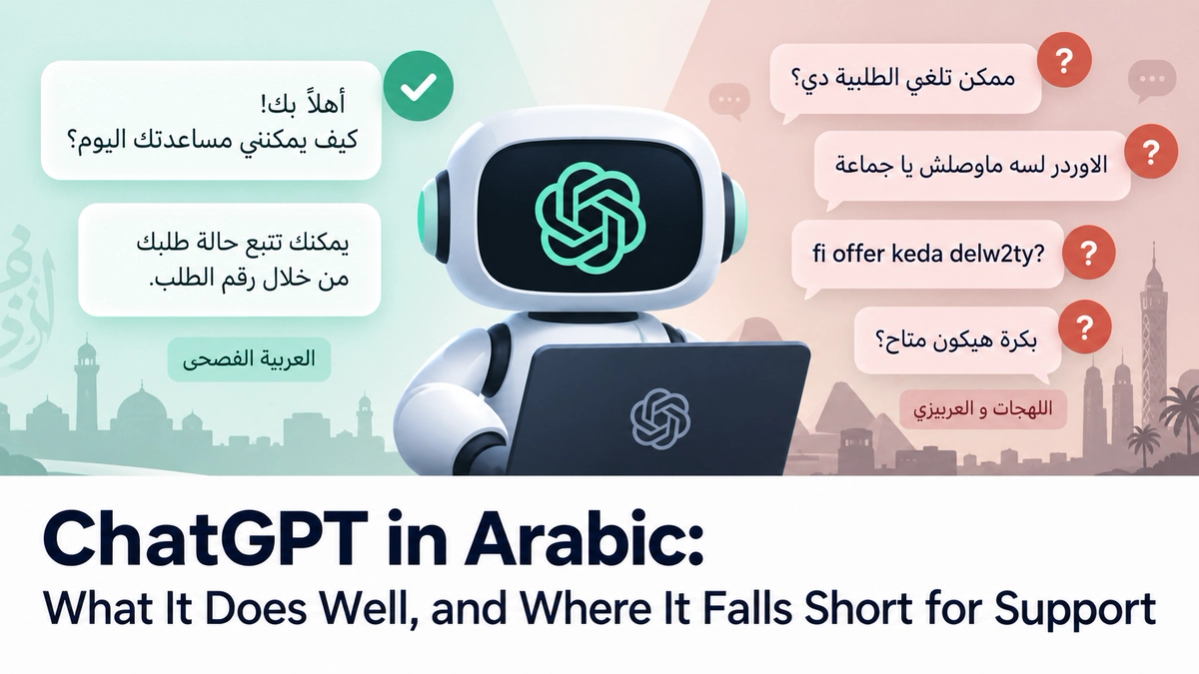
Most Arabic chatbots are English bots with a translation layer bolted on. They reply in formal Modern Standard Arabic to someone who wrote in Khaleeji, and the conversation stalls. Nateq understands the Arabic people actually type — Gulf, Levantine, Egyptian, Maghrebi, and Latin-script Arabizi — and answers the same way.
- Gulf, Levantine, Egyptian, Maghrebi
- Understands Arabizi (3arabi)
- Arabic and English in one thread
- WhatsApp, web, Instagram, voice

What you get
Dialects, not just MSA
A customer in Jeddah and a customer in Casablanca do not write the same Arabic. Nateq reads both and replies in the register the customer used, instead of defaulting to formal MSA for everyone.
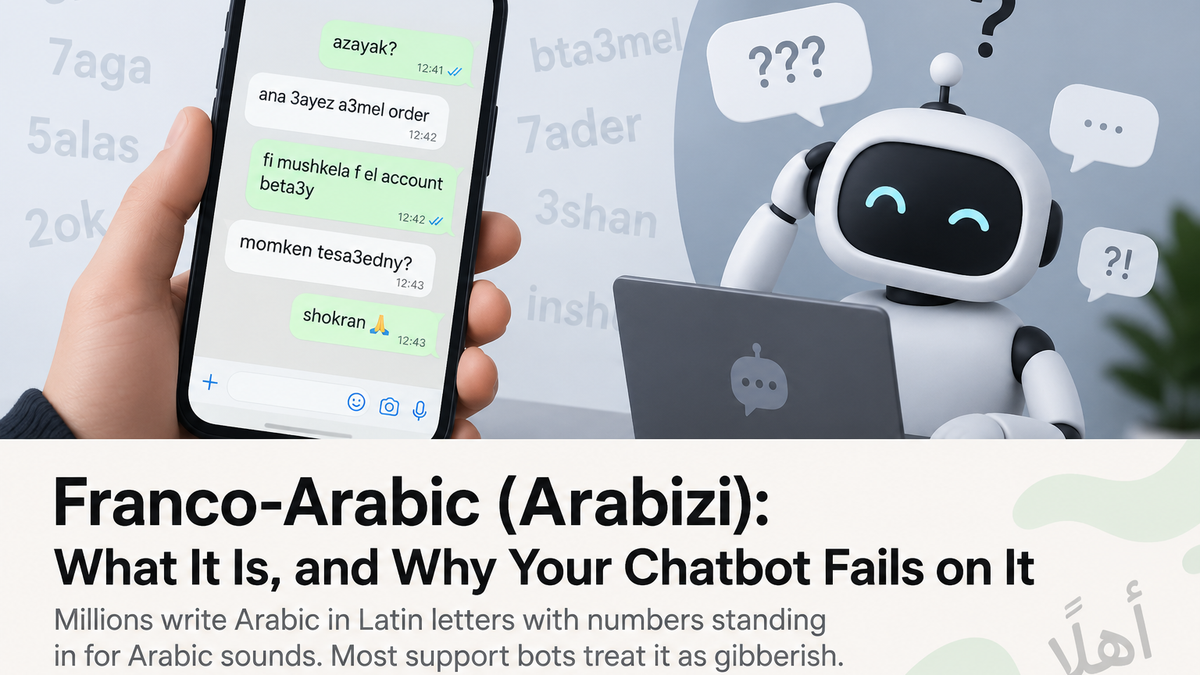
Arabizi and code-switching
Real messages mix scripts — "el order wasal?" or half a sentence in English. Nateq handles Latin-script Arabic and mid-sentence switches without asking the customer to rephrase.
Built right-to-left, not flipped
The chat widget, the agent inbox, and every notification are laid out RTL from the start — correct punctuation, correct number handling, no Latin text stranded on the wrong side.
Answers from your own content
The bot replies from your knowledge base, your policies, and your product data — in Arabic even when the source article is in English, so you maintain one set of articles rather than two.
Handoff with the thread intact
When a conversation needs a person, it moves to an agent who speaks that dialect, carrying the full history — the customer never repeats themselves.
Voice notes, answered
A large share of Arabic support arrives as WhatsApp voice notes. Nateq transcribes and answers them in the same channel rather than leaving them for an agent to play back.
How it works
- 1
Point it at what you already have
Connect your help centre, upload policy documents, or paste a URL. Sources can be in Arabic, English, or both — the bot answers in whichever language the customer used.
- 2
Choose the channels
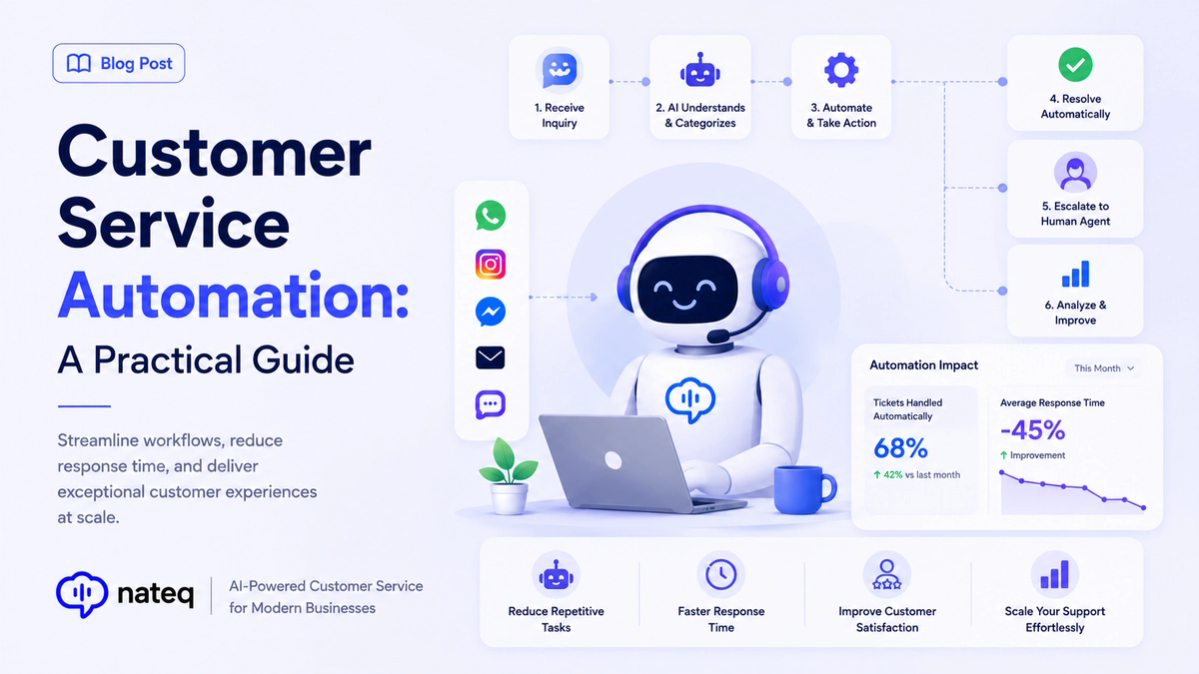
Turn it on for WhatsApp, your website, Instagram, Facebook, or the phone line. The same agent and the same knowledge serve every channel.
- 3
Set the limits, then correct it
Decide how formal it sounds, which topics must always go to a person, and when to hand off. Every conversation stays reviewable, and a correction you make once is saved — so the same question does not fail twice.
Frequently asked questions
Does it actually understand dialects, or just Modern Standard Arabic?
Dialects. Gulf, Levantine, Egyptian and Maghrebi Arabic differ enough in vocabulary and structure that an MSA-only model misreads ordinary requests. Nateq is built to read them and to reply in the same register rather than answering colloquial Arabic with formal Arabic.
What about customers who write Arabic in Latin letters?
Arabizi is handled. Messages written in Latin script with numerals standing in for Arabic letters are read normally, including messages that switch between scripts halfway through.
Can one bot serve Arabic and English customers?
Yes, and from one set of articles. The bot detects the language of each message and answers in it, so you do not maintain a parallel Arabic knowledge base to launch in the region.
Which channels does the Arabic chatbot cover?
WhatsApp, your website, Instagram, Facebook, email and voice calls — all through the same agent, so a customer who starts on WhatsApp and follows up on the website keeps one conversation.
How is this different from translating an English chatbot?
A translation layer converts the reply after the reasoning is done in English, which is where dialect, politeness and local context get flattened. Nateq handles the Arabic message as Arabic, so the answer keeps the register the customer used.
What happens when the bot cannot answer?
It escalates instead of guessing. The conversation moves to an agent with the full history attached, and you set which topics must always go to a person.
Ready to see it in action?
Bring every conversation into one intelligent platform — free during early access.