Product
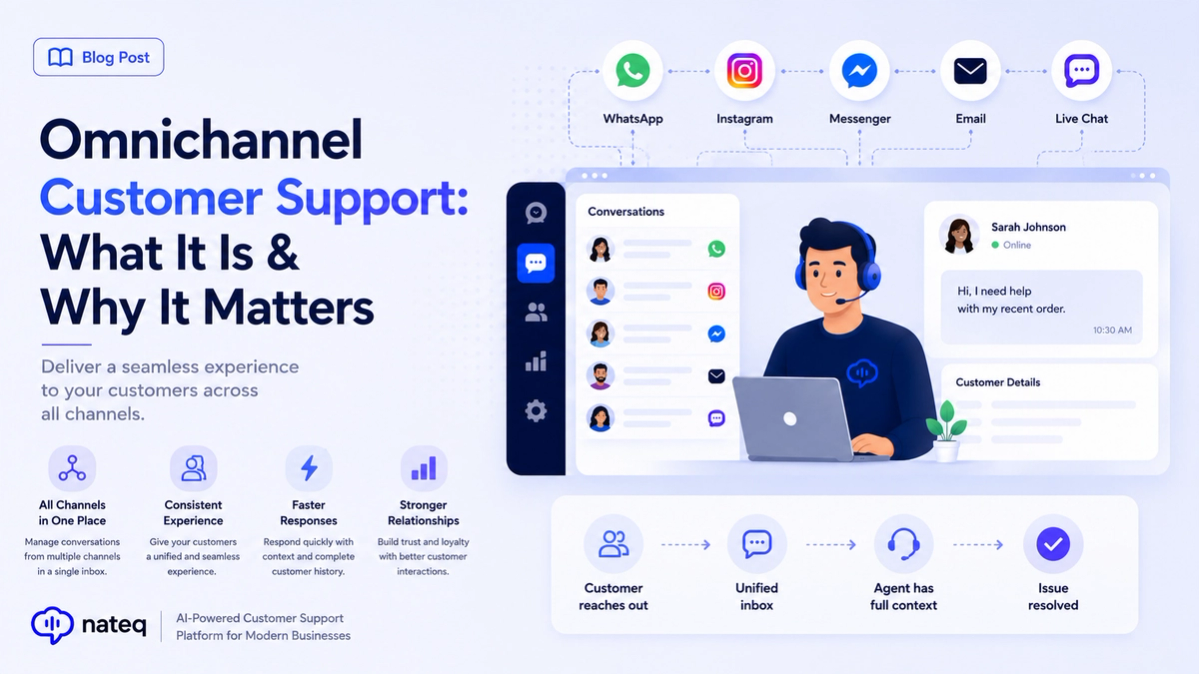
Omnichannel Customer Support: What It Is & Why It Matters
Omnichannel customer support unifies every channel into one connected experience. Learn what it means, how it differs from multichannel, and how to deliver it.
2 min readInstagram support arrives in fragments: a story reply, a comment on a reel, a DM about a product. Nateq collects them into one queue with the customer's history attached, so your team answers a person rather than a notification.
Nateq's Instagram support brings direct messages, story replies and comments on posts and reels into one shared queue. It works with professional Business and Creator accounts linked to a Facebook Page you manage. Replies follow Meta's rules: the AI can answer within 24 hours of a customer's last message, a person can answer until seven days, and after that the customer must write again.
Last updated:
Instagram DMs land beside chat, email and WhatsApp, with the earlier messages from that account in view.
A reply to your story arrives as a message that references the story it answered, so it still makes sense after the story expires.
Comments join the same queue as DMs. Each one stays attached to its post or reel, and you can reply publicly under it.
Sizing, stock and shipping questions repeat on Instagram. The AI answers them from your knowledge base, in the language the customer wrote in.
Instagram sits alongside chat, email, calls, WhatsApp and Facebook, so context follows the customer wherever they go next.
Nateq connects Instagram professional accounts: business accounts and creator accounts. The account has to be linked to a Facebook Page that you admin, because Meta routes Instagram messages and comments through that Page. Personal Instagram accounts cannot be connected. That is a limit set by Instagram rather than by Nateq, and switching the account to a professional type is the fix.
The connection is made through Facebook. Once the account appears in the list of linked accounts, you choose it and its messages and comments start arriving. Nateq is a Meta Tech Provider, so the connection runs through Meta's official approved channels.
Three kinds of item reach the queue. Direct messages are one-to-one conversations. Story replies are messages sent in reply to one of your stories, and they carry a reference to that story, which disappears after 24 hours. Comments come from posts and reels, and each one stays attached to the post or reel it was left on.
A reply to a story you posted is a conversation you can answer. Meta's story reference can be empty when the story has already expired, so the reply still arrives, but the story preview may not.
A public reply is posted under the comment. A private reply sends one direct message to the commenter, within seven days of the comment, and only once. Meta does not allow a private reply to a reply inside a thread, and it does not allow one to a comment on an Instagram ad. For those, the public reply is the only answer available, so write it so it works on its own.
A story reply is different. It is a message, so you answer it as a DM, inside the messaging window. Story replies are where a customer asks about a specific product in the frame, so the reply carries the story reference and the agent can see which story the customer is answering.
Flows can reply to comments, send the private reply, hide a comment, delete it or like it, and their handling is the same as on Facebook. A flow that sends a private reply to an Instagram ad comment is refused at that step, and the flow records the refusal.
The rules match Messenger. For 24 hours after a customer's last message, anyone can reply, including the AI. From 24 hours to seven days, only a person can reply, under Meta's human agent tag, and the AI never sends under that tag. After seven days, Meta closes the thread to replies, so the customer has to write again before you can answer. The composer shows which state applies.
This is why an old DM can look unanswerable. The inbox keeps the history, so the agent can read the whole exchange and decide what to do next, such as replying on a fresh comment or through the customer's other channel.
Connect the account through Facebook, then choose what arrives: direct messages, story replies, and comments on posts and reels. Turn on only the types your team can cover, and set the comment rules that decide which comments get a public reply, which open a private message, and which are hidden. Then start a flow that uses the Instagram trigger, and test it in the simulator before turning it on for real customers.
Keep the AI on for the questions it can answer from your knowledge base, and give it a clear handoff for everything else. The handoff carries the conversation to the shared inbox, where the agent sees the story, post or reel the customer came from.
A customer replies to a story about a jacket and asks about sizes. The reply arrives with the story attached, and the AI answers the size question from your knowledge base.
The question is asked publicly. The team posts a short public answer, then sends the sizing guide in a private reply, so the answer is visible to others and the customer gets the detail.
A DM from a week ago cannot be answered. The agent reads the earlier exchange, then waits for the customer to write again, or replies on a fresh comment instead.
Ad comments cannot receive a private reply on Instagram. The public reply has to answer the question on its own, and the team follows up in DMs only if the customer writes first.
Illustrative. The exchange is a sample, not a recording of a customer.
| Question | Nateq | Instagram app inbox |
|---|---|---|
| Several people answering | Assignment and ownership for each conversation, shared with the rest of the team. | Typically one login or a shared account, so the team sees who replied only by reading the thread. |
| Story replies | Each reply arrives with its story reference, so the agent sees what the customer is answering. | The story may have expired by the time the reply is read, which makes the context hard to recover. |
| Comments and DMs | Comments and DMs sit in one queue, each with its post or reel, and public and private replies are recorded separately. | Comments and messages are checked in different places, which is how a question gets missed. |
| Automation | Flows and an AI agent that respect Meta's messaging windows and the human agent tag. | Typically limited to basic away messages and quick replies. |
Connect a professional Instagram account that is linked to a Facebook Page you manage.
Turn on direct messages, story replies and post or reel comments, so only what belongs in the queue arrives.
Point the AI at your product and shipping content. Your team keeps the conversations that need a person.
Yes, as messages that reference the story they answered. The reference stays with the reply after the story expires, so the reply still makes sense. If the story has already expired when the reply arrives, the preview may be missing, but the message still comes through.
Yes, in one queue. A DM is a conversation of its own, and each comment thread stays attached to its post or reel. A customer who comments and then messages you appears in the same inbox, so you can see both.
An Instagram professional account, either business or creator, linked to a Facebook Page you manage. Personal accounts cannot be connected. That is a limit of Instagram, and switching the account to a professional type is how to fix it. Once it is linked, you manage it from Nateq without sharing its password.
Yes, within the 24 hours after the customer's last message. It answers from your knowledge base and hands the conversation to a person when it needs one. After that, only a person can reply for up to seven days, and the AI does not send under the human agent tag.
No. Instagram does not allow a private reply to an ad comment, so the public reply has to answer the question by itself. Nateq shows that the private reply is not available for that comment, so the team does not waste time on it.
Meta allows replies for seven days after the customer's last message, and a person can reply only from the 24-hour mark to seven days. After seven days the thread closes until the customer writes again. The history stays in the inbox, so you can still read the exchange and plan the next step.
Yes, within your plan's limit. Each account is linked to a Facebook Page you manage, and every connected account feeds the same queue. Count the Pages you will use before you start, because each account needs its own linked Page. The connection screen shows how many Pages and accounts you are using.
Omnichannel customer support unifies every channel into one connected experience. Learn what it means, how it differs from multichannel, and how to deliver it.
2 min read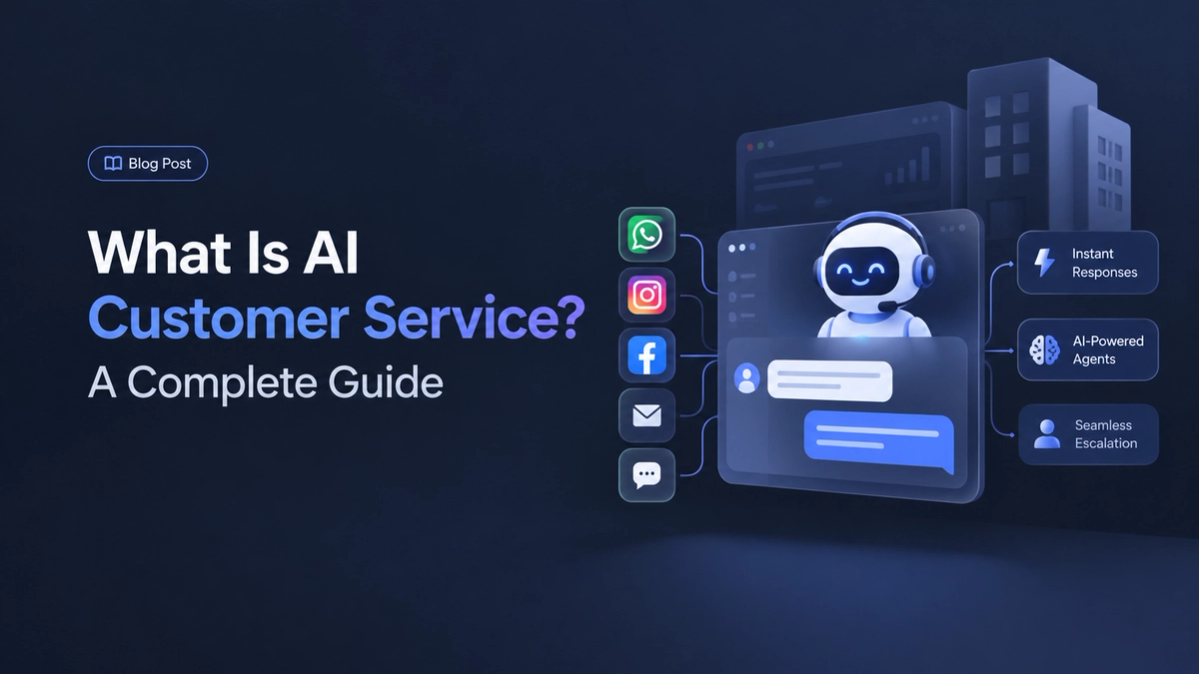
AI customer service uses artificial intelligence to answer questions, route tickets, and support agents. Here is how it works and why it matters.
2 min readBring every conversation into one intelligent platform. Try it free for 14 days — no card required.