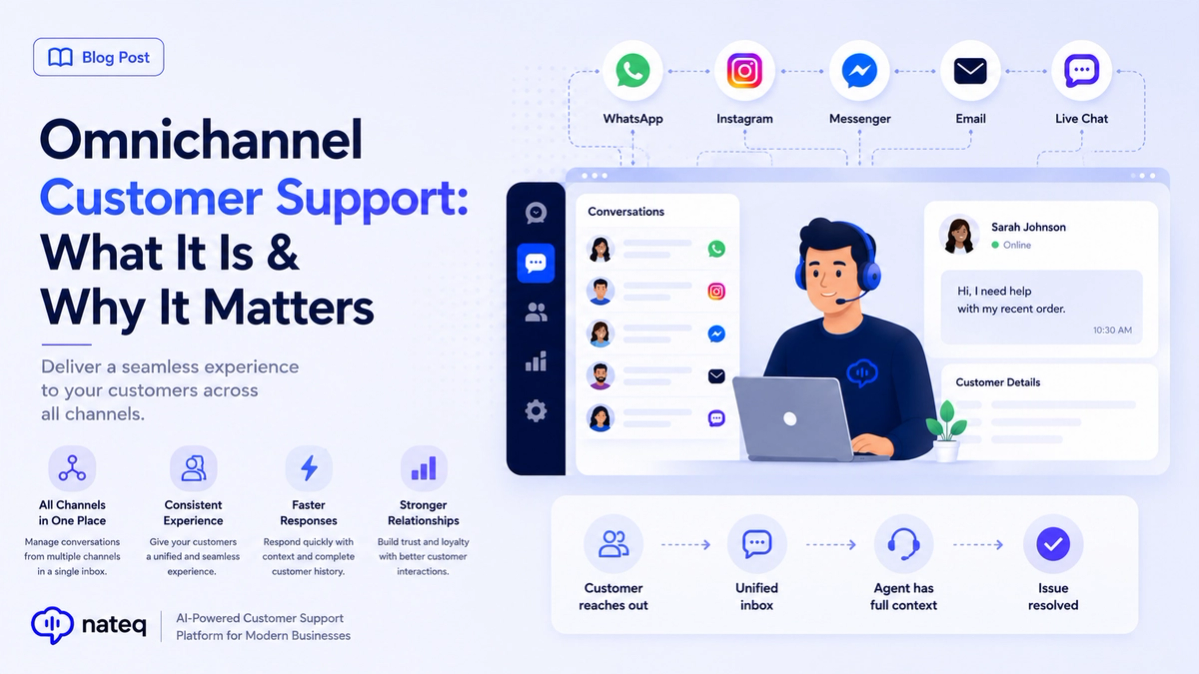
Omnichannel customer support means every channel — chat, email, calls, WhatsApp, and social — works as one connected experience, with shared context that follows the customer wherever they go. It’s the difference between a customer repeating themselves on every channel and being recognized instantly.
Omnichannel vs. multichannel support
Multichannel means you’re present on many channels, but each one is a separate island. Omnichannel connects them: a conversation that starts on WhatsApp and continues over email keeps its full history, so your team always has context and customers never start over.
Why omnichannel support matters
- Customers expect to reach you on their preferred channel and get a consistent answer.
- Agents resolve faster when history and context live in one place.
- You avoid duplicate work and conflicting replies across tools.
- Reporting is accurate because every interaction rolls up into one view.
What makes omnichannel support work
- A unified inbox that brings every channel into one queue.
- A shared customer timeline with tickets, notes, and past conversations.
- Consistent automation and routing rules across all channels.
- AI that can answer and assist regardless of where the message arrives.
How to move from multichannel to omnichannel
Start by consolidating channels into a single platform instead of separate apps. Connect your knowledge base so answers are consistent, then layer in automation and AI. The result is faster resolutions and a support experience that feels seamless to customers.
For teams in Saudi Arabia comparing omnichannel platforms, our guide to the best customer service platforms in Saudi Arabia sets seven options side by side, including which ones put calls in the same inbox as chat.
Deliver omnichannel support with Nateq
Nateq unifies live chat, email, calls, WhatsApp, and social into one intelligent inbox, with shared context and AI built in. See what AI customer service can do, or book a demo to see omnichannel support in action.