WhatsApp Business API Pricing in 2026: What You Actually Pay
If you last looked at WhatsApp Business API pricing a year ago, almost everything you learned is now wrong. From 1 October 2026 the rules change again, and support teams are the ones most affected: every reply to a customer is charged per message.
This guide covers how billing works today, what changes in October, and where the money actually goes once you add up every layer.
Start here: you are not billed for conversations anymore
The old model billed you once per 24-hour conversation window. You opened a window with a template, and everything you sent inside it was covered by that single fee.
That ended on 1 July 2025, when per-conversation billing for template messages was replaced by per-message billing. You are now charged per delivered template message, based on the message category and the recipient's country.
The practical consequence: a campaign that sends one marketing template followed by three utility follow-ups used to cost one fee. It now costs four.
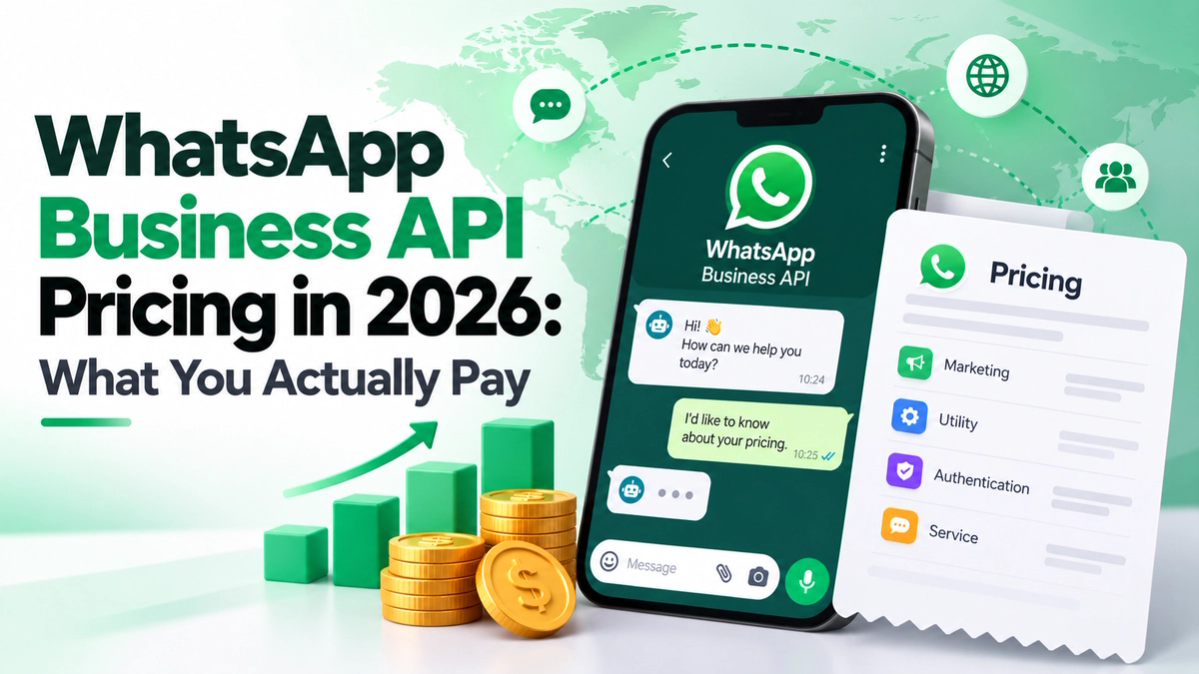
The four message categories
Everything you send falls into one of four buckets, and the category determines the price.
Marketing — promotions, offers, re-engagement, cart recovery. The most expensive category everywhere.
Utility — order confirmations, shipping updates, appointment reminders, payment receipts. Tied to a transaction the customer already made. Significantly cheaper than marketing.
Authentication — one-time passcodes and login verification. Usually priced alongside utility.
Service — your replies to a customer who messaged you first, whether a person or a third-party AI agent such as Nateq writes them. Charged per message from 1 October 2026.
Category matters more than most people expect. A template misclassified as marketing when it should be utility results in higher charges, and Meta requires pre-approval for every template before it can be sent. Getting categories right is a cost-control exercise, not just a compliance one.
What stays free from 1 October 2026
From 1 October 2026, answering customers is not free. What stays free is narrow:
- Messages customers send you.
- Service and template messages inside the 72-hour free entry point window.
- The first 1,000 service messages each calendar month on each business phone number (service messages only, not utility or marketing). A business that uses several WhatsApp numbers gets the allowance on each number.
The free entry point window opens when a customer starts a chat from a Click-to-WhatsApp ad or a Facebook Page call-to-action, and service and template messages inside it are free for 72 hours. Those ads remain a way to start conversations whose first messages are not billed: you pay Meta for the ad rather than for every message.
What changes from 1 October 2026
- Replies to customers, whether a person or a third-party AI agent such as Nateq writes them, are service messages, charged per message from 1 October 2026 at the same rate as utility and authentication in the recipient’s market. There are no volume tiers for service.
- Utility templates sent inside an open 24-hour customer service window, free since 1 July 2025, are charged from 1 October 2026.
- Stays free from 1 October 2026: messages customers send you, and service and template messages inside the 72-hour free entry point window that opens when a customer starts the chat from a Click-to-WhatsApp ad or a Facebook Page call-to-action.
- The first 1,000 service messages each calendar month are free on each business phone number. The allowance covers service messages only, not utility, authentication or marketing messages, and there are no volume tiers beyond it. A business that uses several WhatsApp numbers gets the allowance on each number.
- One charge per message: a non-template message with promotional content is not additionally charged as marketing.
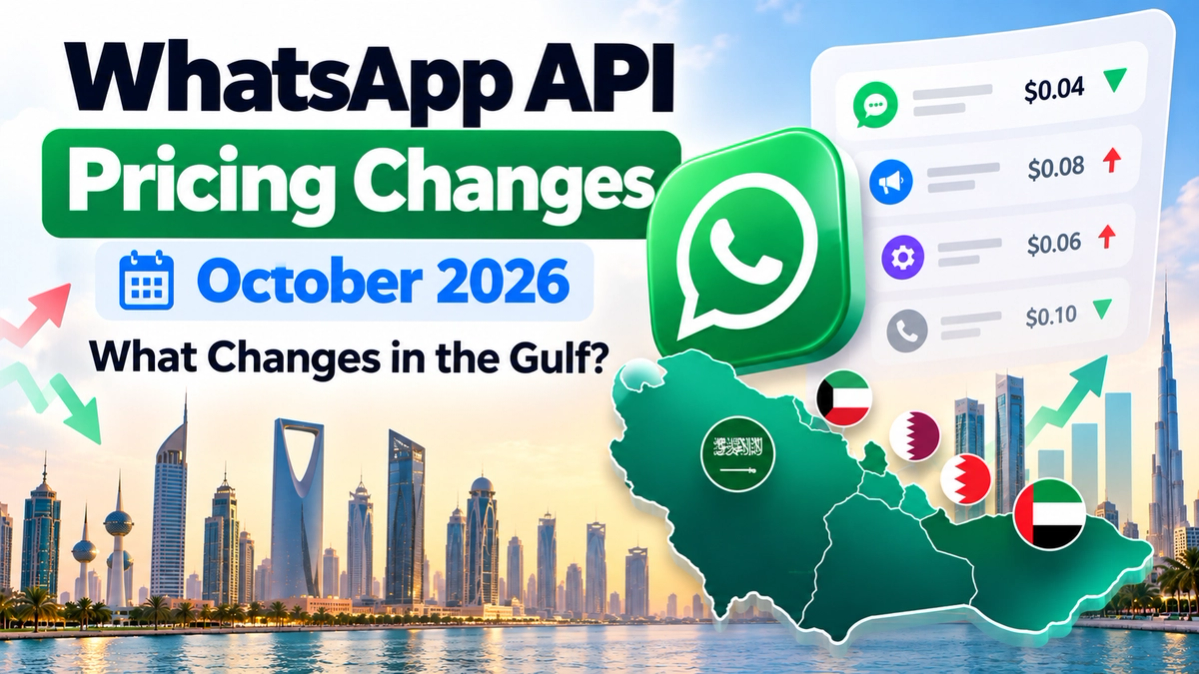
- Kuwait and Oman are standalone markets on the rate card from 1 October 2026 (previously Rest of Middle East). Qatar has been standalone since 1 July 2026. Bahrain remains in Rest of Middle East.
- Meta requires a payment method on file by 30 September 2026 to keep delivering service messages.
If you run a support team, this inverts the economics. Replies to customers cost almost nothing until 30 September 2026; from 1 October 2026, every reply beyond the first 1,000 service messages in a calendar month on each business phone number carries a fee at the customer’s market rate, with no volume tiers.
The 72-hour free entry point does still apply, so traffic arriving from Click-to-WhatsApp ads keeps its advantage.
The obvious mitigation is fewer, denser messages. Consolidating fragmented replies into one clear message, or using WhatsApp Flows to capture several customer details at once, keeps billable message volume down. If your team or your bot currently replies in a stream of short messages, that habit is about to have a price attached to it.
Rates are set by your customer's country, not yours
This trips up almost everyone. Pricing is determined by the recipient's country code, not the sender's location. A business in London messaging a customer in India pays India's rate; a business in Dubai messaging a customer in Germany pays Germany's rate.
Price per message in US dollars, by recipient country and message category:
- Saudi Arabia: marketing $0.0576 · utility $0.0107 · authentication $0.0107 · service $0.0107 · authentication-international $0.0598
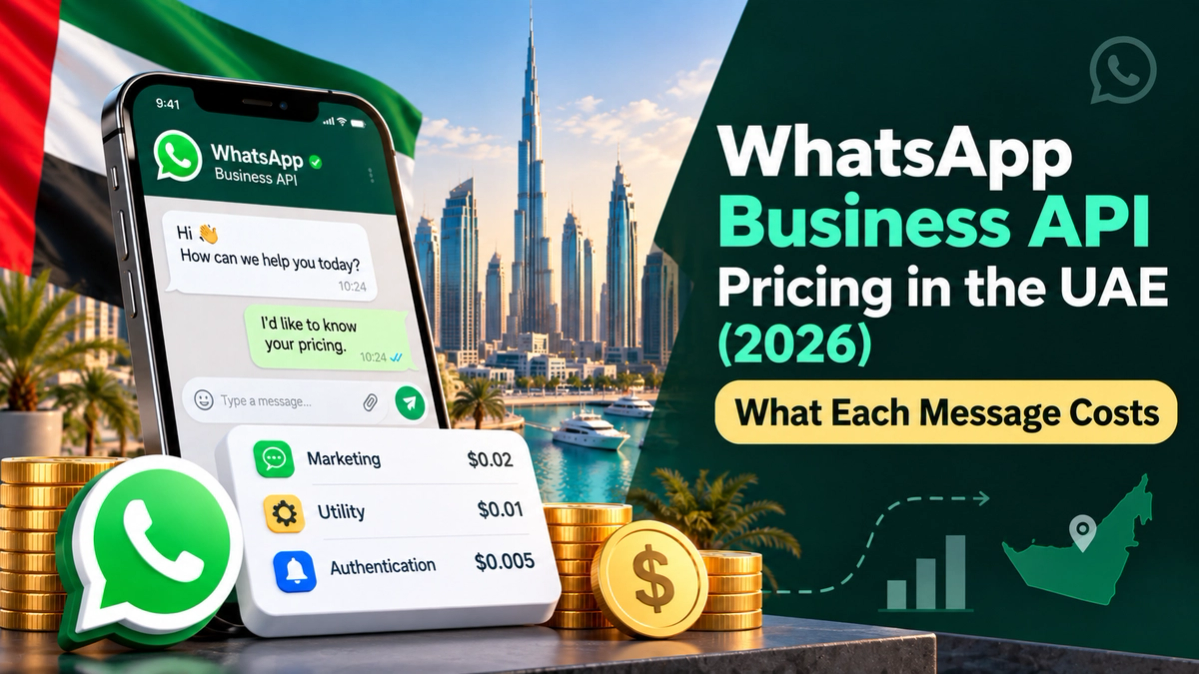
- United Arab Emirates: marketing $0.0576 · utility $0.0157 · authentication $0.0157 · service $0.0157 · authentication-international $0.051
- Kuwait: marketing $0.0792 · utility $0.044 · authentication $0.044 · service $0.044 · authentication-international $0.12
- Qatar: marketing $0.0341 · utility $0.012 · authentication $0.012 · service $0.012
- Oman: marketing $0.0341 · utility $0.0247 · authentication $0.0247 · service $0.0247 · authentication-international $0.06
- Bahrain (Rest of Middle East): marketing $0.0392 · utility $0.0091 · authentication $0.0091 · service $0.0091
- Egypt: marketing $0.0644 · utility $0.0036 · authentication $0.0036 · service $0.0036 · authentication-international $0.065
Effective October 1, 2026 — Meta official rate card — last checked 2026-09-24
What that means for a support team: the cost of 5,000 replies a month from one number, by customer country:
- Example (from 1 October 2026): 5,000 support replies a month from one number to customers in Saudi Arabia, of which 4,000 are charged after the first 1,000 free service messages that month on that number: 4,000 × $0.0107 = $42.80.
- Example (from 1 October 2026): 5,000 support replies a month from one number to customers in the United Arab Emirates, of which 4,000 are charged after the first 1,000 free service messages that month on that number: 4,000 × $0.0157 = $62.80.
- Example (from 1 October 2026): 5,000 support replies a month from one number to customers in Kuwait, of which 4,000 are charged after the first 1,000 free service messages that month on that number: 4,000 × $0.044 = $176.00.
- Example (from 1 October 2026): 5,000 support replies a month from one number to customers in Qatar, of which 4,000 are charged after the first 1,000 free service messages that month on that number: 4,000 × $0.012 = $48.00.
- Example (from 1 October 2026): 5,000 support replies a month from one number to customers in Oman, of which 4,000 are charged after the first 1,000 free service messages that month on that number: 4,000 × $0.0247 = $98.80.
- Example (from 1 October 2026): 5,000 support replies a month from one number to customers in Bahrain (Rest of Middle East), of which 4,000 are charged after the first 1,000 free service messages that month on that number: 4,000 × $0.0091 = $36.40.
- Example (from 1 October 2026): 5,000 support replies a month from one number to customers in Egypt, of which 4,000 are charged after the first 1,000 free service messages that month on that number: 4,000 × $0.0036 = $14.40.
From 1 October 2026, a single service reply to a Kuwaiti number costs $0.044, about 4.1 times the $0.0107 it costs to a Saudi number. For a business serving customers in Kuwait, the number of messages per conversation matters more than anywhere else in the Gulf.
Any figure in any guide, this one included, should be checked against Meta’s rate card before you build a budget on it.
Currency: since 1 April 2026 a WhatsApp Business Account can be billed in SAR or AED. The currency is chosen when the account is created, and an account created in USD cannot be switched later.
VAT (15% in Saudi Arabia, 5% in the UAE) applies to platform fees. Meta’s cross-border charges may fall under the reverse charge depending on your company’s VAT registration; check with an accountant.
For every other market, see Meta's official rate card.
For more detail: WhatsApp Business API pricing in the UAE and WhatsApp API pricing changes in October 2026.
The layer nobody quotes you
Meta's rate card is a wholesale price. You cannot buy at it.
You cannot access the WhatsApp Business API directly — you must go through a Business Solution Provider, or a no-code platform that wraps one. Some providers add a per-message markup or a platform fee on top of Meta's rates; check your provider's pricing.
So your real cost per message is:
Meta's rate for the recipient's country + your BSP's markup + any platform subscription
Once you factor in provider markup and template approval delays, the real cost can end up above the headline rate card.
When you evaluate providers, the question worth asking is blunt: do you bill Meta's rate at cost, or with a markup, and is there a per-seat cap on top?
Three costs that don't appear on the rate card
Rejected templates. Poorly structured templates are commonly rejected, which delays campaigns. The cost is a missed send window, not a line item — but for a Ramadan or Black Friday campaign, that's the whole cost.
Degraded quality rating. You are only charged for successfully delivered template messages, but a degraded quality rating on your WhatsApp Business Account causes more messages to queue without completing delivery — cutting your reach without cutting your BSP's platform fees. Quality rating management is cost management.
Fragmented replies. From 1 October 2026, each one is a separate service message, so three short messages use up the monthly free allowance three times as fast as one clear one, and cost three times as much once it runs out.
What's coming next
Two developments worth tracking.
Meta is launching a max-price option through its Marketing Messages API in 2026: you set the maximum you are willing to pay per delivered marketing message, and Meta charges the lower of your max price and the market rate. If you run click-to-WhatsApp ads at volume, this is a real lever.
Meta Business Agent, Meta’s own AI, is a separate category since 1 August 2026: $2.00 per million tokens (about 4–5 US cents per message, according to Meta), and it is not free inside the 72-hour free entry point window. If you use Meta’s agent rather than your own, that is a second meter running beside the messaging one.
What to do now
- Audit your reply patterns. Count the average number of outbound messages per support conversation. That number becomes your October multiplier.
- Consolidate. Rewrite bot flows and canned replies that fire three short messages into one clear message.
- Check your template categories. Anything doing a utility job but classified as marketing is overpaying now and will keep overpaying.
- Push acquisition toward Click-to-WhatsApp ads. The 72-hour free entry point survives the October change and becomes comparatively more valuable.
- Get your markup in writing. If your provider won't tell you their per-message margin, that is itself the answer.
---
With Nateq you connect your own WhatsApp Business Account, so Meta bills you directly, per message, at its published rates, with no markup from us. What you pay us for is the customer service platform itself: the shared inbox, and an AI agent that puts the answer in one message rather than several. See Nateq pricing.